Table of Contents - A handy way to check out my articles by topic
My most recent Guides:
As an Amazon Associate I earn from qualifying purchases.
You can reach me at: powerscorerpg@gmail.com

Thursday, October 17, 2019

Dungeons & Dragons - Hellturel Review


Today I'm going to take a look at another DMs Guild product. It's Hellturel, an expansion on the Elturel section in Baldur's Gate, Descent into Avernus.

This one is a bit of a tougher sell on me, as I am primarily only interested in the pure Nine Hells stuff in Descent.

Right off the bat, one thing that I notice in here is the layout. Most DMs Guild products (mine included) tend to imitate the official D&D "look." You know... parchment-y backgrounds, coffee stains, all that stuff.

This book goes for more of a Pathfinder look. It looks very professional. Check it out:

Another thing I notice is that the maps are of very high quality.. The artist, Meshon Cantrill, has a style similar to that of Jared Blando, which is a good thing. I don't want to just cut and paste a full map into this blog, so here's just a horizontal slice to give you an idea of what the maps look like:

Chapter 1: A Pair of Black Antlers

The basic idea here is that a bunch of demons who serve Baphomet have taken over a tavern. The heroes can go in and clear them out.

This is a tavern, so it amuses me greatly to see that there are 3 drunk minotaurs in the common room. I'm sure players will do all sorts of hilarious/horrifying things with that scenario.

There is a holy avenger in here! Dang.

"A barlgura lets out a loud, pungent belch as it guzzles a barrel of warm brine labeled "PICKLES."

A very cool NPC lurks in this place. I don't want to spoil too much, but I love it when D&D spells are used in a logical manner.

This scenario is good. It could have been boring, but the author came up with a bunch of fun things to mess around with in there.

Chapter 2: Helm's Shieldhall

There are citizens in the hold of this building. Devils are trying to get at them.

"The gates held until a few hours ago when the devils teleported an infernal war machine into the city..." Awesome! The bad guys literally crashed a war machine into the front gates.

There's a really good trap in one area. A character could lose their head!

The armory is loaded up with fun stuff for the heroes to use, including five silver bombs "which function like fragmentation grenades" that are in the DMG. I think it is a really cool idea to re-skin some of the modern weapon stats in this manner. So many times, I forget that there's some cool little thing in the 5e DMG that could solve some problem I am having. I almost feel like I need to re-scan the DMG every 6 months to remind myself of all the things that are in there.

There's ANOTHER awesome trap. Again, I don't want to spoil it, but it utilizes a magic item in a very cool way.

A nice variety in this chapter. This could be placed in almost any campaign as a building over-run by devils.

Chapter 3: Dragoneye Dock House

The heroes might check out this house for a variety of reasons listed in the book. It is home to a deathlock - an undead warlock who draws power from Zariel.

"Twin half-elf girls of about eight years of age in matching, bloody, pink dresses sit at a child-sizes wood table and pretend to have tea with a gagged and bound human..."

There are also bad guys who sleep among the bodies of their victims. Yikes!

Wow there is another epic trap here, too. Don't want to spoil it, but it's a rough one!

There's a chest full of new magic items, which are listed in an appendix in the back of the book. "Celestial caltrops," a "devil catcher," and more.

Looking at these items... they're perfect for my Dungeon Academy campaign. My group is linked up with a big church of Umbra, goddess of good, and they could definitely get their hands on these before the heroes make their excursion into Avernus.

Chapter 4: Owlbear Butcher Shop

No, they don't sell Owlbear meat. The shop is named in part for the owner's pet owlbear, who would join the ownerand go out into the woods to hunt exotic animals. You could probably run a whole campaign off of the idea of heroes hunting exotic monsters to serve as expensive meals at their restaurant and to sell parts as components for potions, spells, and magic items.

There's an owlbear with orange eyes that burn! An infernal owlbear!

Overall

Is this worth $5? Hell yes! This book has a big pile of good ideas that you could use in whatever you happen to be running. Very useful stuff.

Wednesday, October 16, 2019

Dungeons & Dragons - Encounters in Avernus Review

    Now that I have gone through Descent into Avernus in great detail, I'm going to look at some of the products linked to it on the DMs Guild. Let's see if we can find some stuff worth adding into our Avernus games!
    Today, I'm going to check out Encounters in Avernus. Now, if I know you - and I don't - I bet you're wondering what exactly is in this book. Well, let me tell you: It has encounters set in the first layer of the Nine Hells, also known as Avernus!

    The one thing I notice on my initial glance is that they used art from the main book, including pieces that were IMO somewhat hampered by the two page spread. Check this one out:

    Better, right?

    Random Charts: This book makes generous use of random charts. I love random charts. I would say that in many instances, the best use of the charts that determine the makeup of an encounter, that you go through them beforehand and pick your favorite. Rolling at the table while you are running your session might lead to some hiccups. At least, it would for me.

    Chapter 1: Avernus Encounters

    We start off with a devil name list, which is very handy.

    Here are some of my favorite encounters in this chapter, just to give you an idea of what's in this book:
    • Weather: There is a random weather chart. My favorite result is "Stygian Humidity", where "the waters of the River Styx permeate the air itself."
    • Bone Piles: A chart of items you could find in Avernus. It includes some of the new magic items listed in appendix b of this book.
    • Wreck: A wrecked war machine... "The previous rider of this war machine shoved a whole quasit into the machine's intake valve...." If the group fixes it up, the machine has a special boon and bane.
    • Avernus Chase Complications: A horde of fiends is chasing you. Roll on the chase chart. This one is fantastic!
    • "Soul Canon": A wrecked war machine with a special "soul canon". These are tremendous!
    • Knight: A knight of Elturel hunting down a traitor.
    I 100% love this so far. These encounters are very concise, and many of them are very much worth using. There's actually more stuff in this chapter that I like aside from what I listed, but I think this is a good sample.

    If I had a complaint, I'd say that a few entries could use more specific numbers. For example, one entry mentions "a group of nupperibos" are in the group's way. I'd prefer it if the entry said "3d4 nupperibos". Even though I hate rolling d4s.

    In one encounter, the group can come across a prisoner. There's a quick chart listing types of creatures that could be the prisoner in question. I think it would have helped to give the creature a name and a few words describing its personality.

    Chapter 2: River Styx Encounters


    The River Styx! Who doesn't love the River Styx? Let's see what we've got:
    • Angel: An angel spying on the Blood War, ordered not to intervene. You could do tons with this.
    • Familiar Gnomes: Two gnomes riding around in a bulette/war machine with the same last name as one of the best-named gnomes in Dragon Heist: Cockaby Fapplestamp.
    • Hag Barge: This is one that I wish got more space. A hag that is selling contraband! I'd like it if her actual hut was on the barge.  
    • Assassin: Her memory is wiped and she has a tattoo of a labyrinth on her back! 
    • "Soul Shower": "A huge number of screaming, translucent, humanoids shower down from the sky into the River Styx." This one is great.
    One interesting encounter in this chapter involves a potion maker that is using water of the River Styx to make magic potions. The water of the River Styx normally steals your memories.

    As far as I can tell, these potions function normally. I think there should definitely be come sort of added effect - maybe a memory boost/memory/replacement (perhaps "taken" from the remnants of a soul in the river), or an infernal additional effect or something.

    Another very good chapter!

    Chapter 3: Elturel Encounters


    Elturel is the city that has been pulled into the Nine Hells. In the book, the group has to make their way through the city to get to the main palace.

    A lot of these encounters are either simple traps set by the devils to lure the group near, or citizens struggling to survive - a building on fire, a few knights fighting a losing battle, that kind of thing. Here's some encounters of note:
    • Bridge: An NPC has created an "invisible bridge" that the group can use to cross the gap in the city.
    • Keeper of the Keys: A chain devil sells keys. I really, really wish that a random chart was included with this one! Great idea.
    • Skeleton Bonfire: Awesome. The skeletons get up and attack!
    There is one encounter involving a spellcaster looking for her missing imp. I'm not sure why the group would stop everything to scour the city for a random imp. It could be amusing for the group to find the imp in some ridiculous predicament 10 sessions from this one.

    I am noticing that, in general, 5e is a bit soft on the "rules of Hell". I think that is a good thing. In older books, there were very clearly defined rules on what happened to souls that appeared on Avernus. It was stated pretty clearly in older editions was that devils have no memory of their mortal lives.

    In this book, there's a least one instance of a devil remembering its mortal life. I prefer this.

    A devil remembering its time as a mortal can lead to a lot of cool things. A memorable mortal villain that the group faced and killed could come back in devil form!

    Chapter 4: Encounter Chains

    This chapter contains two longer strings of encounters linked to one another.

    Tiamat: The first storylinr involves Tiamat, and one of the smaller sections of this I believe references one of the bad guys from Tyranny of Dragons. There is a very cool part to it where the group needs to bring a golden heart to the demon zapper from the main adventure.

    Serpent: The other storyline involves a couatl that was allied with Zariel when she was an angel. It's a bit of a twisty story.

    Appendix B: Magic Items

    After a pile of stat blocks in appendix a, we get 5 new magic items.

    I think my favorite is the poppet - a doll linked to a specific individual. You can use the poppet in rituals to cause the person excruciating pain.

    Overall

    Is this worth buying? Of course! It's $6! A no brainer, if you ask me.

    Descent into Avernus is already full of good encounters that are set in the first layer of the Nine Hells, but this book is full of slightly smaller events that should make the campaign feel more full. It will definitely add to your campaign in a positive way, so you should check it out.

    Tuesday, October 15, 2019

    Dungeons & Dragons - Tyranny of Dragons Special Edition

    When 5th edition officially got underway, two adventures where released: Hoard of the Dragon Queen and Rise of Tiamat. The first scenario led right into the second, and pitted your players against a cult of Tiamat.

    To celebrate the 5 year anniversary of the release, Wizards has published a new book that combines both adventures in one volume, and adds in a sketchbook section.

    Today I'm going to go through this book and see what's new, if anything, give my overall thoughts, and reflect on what it was like to run this game when nobody knew if 5th edition would be popular at all.

    Links

    Back Cover

    Changes

    Sketchbook Section - The Dragon Mask
    The thing that I am most interested to see is if changes were made in the adventure. There were a few notorious spots where bad guys were too powerful, and I am wondering if they expanded the Thay chapter, which was really brief in the original.

    For the most part, this book is the same as the original printed versions.

    Hazirawn: They cleaned up a slight error in the stat block of Hazirawn, a rather confusing issue discussed here.

    Kobolds: The biggest complaint from the original was that the kobold encounters in the opening chapter were too hard and groups would get wiped out. The very first encounter pitted the 1st level characters against 8 kobolds.

    On page 24 of this new book, we see that it is now 7 kobolds, and it is stated that the kobolds assume the heroes are members of the cult and are busy focusing on townsfolk. So, the group should get a surprise round if they choose to fight them.

    The Assassins: This one always amused me. The heroes might stop off at a tavern and get jumped by assassins who were way too powerful for a low level group of heroes. Apparently, the reason this was in the book is because when the adventure was written, assassins were much weaker than what ended up being printed in the 5e monster manual.

    Checking page 52 of this new book, the assassins have been replaced with 4 veterans.

    Still Stingy on Treasure: The white dragon's treasure hoard had no magic items in it! Surely they've changed that in this new edition. Check out page 123. Still no magic items! Though it does say that you can "add potions, scrolls, and magic items at your discretion."

    Chuth, the green dragon, has an item-less hoard as well.

    Thay: Still tiny!

    The Cult Strikes Back: Chapter 13 on page 140 has a few encounters detailing how the cult tries to assassinate the group. If I remember right, the original section included some yugoloths that felt really out of place. Those are gone now!

    Overview


    Cover: The cover is really great. It is probably my favorite of all the "special edition" covers so far.

    Paper: One thing that I LOVE about this book is that they used the same "parchment" type paper they used in Rise of Tiamat. It's thinker, heavier, doesn't "shine" and the ink doesn't smudge off onto your fingers.

    The downside to this is that it seems to make the art come out a few shades darker. All things considered, I like this paper more than what the use for their newer books.

    Sketchbook: The most substantial addition to this book is the sketchbook section in the back. It has art depicting cult designs, dragon designs, various locations, and what looks to be some comic-book style two-page spreads of dragons.

    What Happened to the Dragon Mask? There's a few sketches of the dragon mask, the magic item that the cult can use to pull Tiamat out of the Nine Hells. It's interesting to think about now, with all the lore developments since this adventure was released.

    In Descent into Avernus, we see that Tiamat has Arkhan the Cruel working as her agent and, in the end, he might become the new ruler of Avernus. If Arkhan set his sights on it, could he track down the mask and give it to his tortle sidekick to bring Tiamat back to the Material Plane?

    Where did the dragon mask end up at the end of Rise of Tiamat? In the hands of the adventurers? In the possession of the Council of Waterdeep?  Could Lord Neverember have absconded with it when he was chased out of Waterdeep? Could the mask have been in the vault at the end of Waterdeep: Dragon Heist?

    Cultists! Looking at the sketches of the dragon cultists, I really wish they would have made themed cultists like the ones that are in the Neverwinter MMO. In that game, there are cultists aligned with each of the five chromatic dragon types, and each has a special power relating to the dragon they are aligned with.

    For example, a green dragon cultist might be able to spit acid, while a red dragon cultist might be able to cast a fire spell or be fire resistant.

    I do like the dragonsouls, dragonwings and others on page 182, so it's not that big of a deal.

    Dragon Factoids. I love the dragon sketches. They contain all sorts of little details you can use to help make a dragon come to life. For example, a black dragon's nose slits can seal up, aiding the creature when it goes underwater.

    When a blue dragon is about to breath lightning, it "charges up". A humming noise grows as little blots of lightning crackle around its head.

    Running Tyranny of Dragons


    If you're reading this artcle while wondering if this adventure is something you might want to run, I wrote a LOT of stuff about doing so in this blog. Check out these:
    I started running games in my local game store in 2008. I ran tons and tons of 4th edition D&D, and I loved it. Despite that, everyone agreed that the 4e rules were flawed.

    When the 5e playtest was rolled out, we dove in. In the game store, it was a weird transitional period where I ended up running games for new players. These new players were younger. In 4e, I was running for people in the 20's and 30's. In 5e, I found myself with a group of kids ranging from age 9 to 15!

    It was a huge adjustment. I wrote about it a lot in the early days of this blog. We played through Scourge of the Sword Coast, Dead in Thay, and even a "D&D Next" conversion of White Plume Mountain.

    As 5e hit, I wondered what attendance would be like. 4e was plenty popular in our store, and we always had a few tables going. I was running 2-3 games per week, and at times I actually had to turn people away!

    5th edition launches... and people just poured into the store. There was a massive influx of players, to the point where it got bigger than Magic: The Gathering (which was huge in terms of both attendance and profit in our area).

    I wondered if there would be a decline after the first few weeks. There was not. In fact, more people showed up. It just got bigger! It was crazy.

    The Blog

    I had been thinking about writing a D&D blog for years. I wanted to share the trials and tribulations of being a DM, which can be a weirdly lonely endeavor. Sometimes I would toil away for hours and hours during the week while preparing a module, only for the session to fall flat. The next week, I'd pick myself up and do it again, and the next one would be a home run. It was a wild ride.

    I'm glad now that I didn't write a blog during 4e. I wasn't ready at that time, and our group's shenanigans probably weren't fit for public consumption. We had a ton of fun, but I think choosing to wait until 5e was a great idea.

    I had begun the blog at the start of 5e, and was spewing forth years and years of pent-up ideas. Everything from goofy D&D stories to whacked-out theories.

    During 4e, I had worked out a system for preparing adventures. It involved hand-written notes, both on paper and on the margins of printed-out 4e adventures. Over the span of 2007 to 2013, I had perfected the art of DM preparation, at least for myself.

    I realized that the blog was, at the very least, a place to keep all my prep work in a fairly easy-to-find format. I also realized that my DM prep stuff would probably be very useful for new DMs as well. So I sat down and started work on the Guide to Hoard of the Dragon Queen.

    It was and still is very popular, and over time, I became known for my guides. I even put them on the DMs Guild, and I now make a living off of this stuff!

    It was Tyranny that got the ball rolling for me.

    The Campaign
    I wrote so much about this campaign, in detail, and I guess there's no need to rehash it.

    But, 5 years later, I can say that what I liked about the campaign was running for kids who genuinely enjoyed the adventure. I was very proud of how well-behaved they were, and I marveled at how they respected one another and figured out the rules on their own.

    People seem to bash the younger generation quite a bit online. This bothers me. Kids were much worse when I was growing up! It's not even close.

    My kids were awesome D&D players. They showed up every week, they paid attention, they never looked at their phones. They were funny and they worked as a team. Heck, one of them even did drawings for me!

    We plowed through Tyranny with gusto. When my group was literally fighting Tiamat, the table next to us was still slogging through the endless caravan ride in Chapter 4. They were a great group and I'm really glad we got through the whole campaign.

    Overall: So, is this book worth buying? I'd say yes. The adventure is good, but you will need to do a lot of work to keep it running smoothly. It was certainly worth doing, in my experience.

    Now, with a more expanded version of the city of Waterdeep available in Waterdeep: Dragon Heist, you could really flesh out the council and give greater detail to the group's time in that city. I believe there are a few Tyranny encounters set in Waterdeep that you could merge with some of the Dragon Heist detailed locations and NPCs.

    Personally, this special edition of Tyranny of Dragons is more of a trophy than a gaming tool. This book represents an absolutely phenomenal stretch of 5 years both for D&D as a whole, and for me as a person.

    Monday, October 14, 2019

    Dungeons & Dragons - Baldur's Gate: Descent Into Avernus Review

    Today I’m going to try to review the newest D&D adventure, Baldur's Gate: Descent Into Avernus. I read the whole thing, I wrote a guide to it, I ran a bit of it, and I’ll be running more of it in my Dungeon Academy campaign.

    I’m going to go in depth, so there will be major spoilers throughout this review.

    The Good

    I am a big fan of the planes in D&D, especially the Nine Hells, so I was very happy when I first heard about this book. I was even more thrilled when I found out they were going to flesh out Zariel, a D&D entity that had been around for a long time but was barely ever described in any of the old books.

    Zariel: I just think Zariel is cool, both in her angel incarnation and in her devil form. She’s a bad guy with depth, someone who has specific goals in mind. She’s not necessarily someone you have to fight - she’s someone you have to interact with. Some groups might want to save her, while others might want to destroy her. I really like that she’s not a generic “bad guy”.

    I’m a little torn on the hollyphant sidekick. It just seems a bit too silly, even for me.

    Stat Blocks: In each book, they change up how they present the adventure. This time around, some stat blocks and items are presented in the immediate text rather than in an appendix in the back. I prefer this, as I always like it when all the information I need is right there on the page in question.

    Running a D&D session is complicated enough without having to flip all over the book to get the information I need.

    Also, I should note that while I have virtually no interest in the Baldur's Gate section, the "Cultist of the Dead Three" stat blocks are phenomenal. They're short, but each has some kind of cool power that sets it apart.

    The Art: I think this is my favorite cover of them all so far. One of my biggest beefs with 5e art is that too much of it lacks a certain “badass” quality that older editions had. This cover definitely works in that regard..!

    I still maintain that for whatever reason, the best art in 5e is of landscapes, not people. I’d also say that the item art is better, too. The soul coin on page 226 is great, as is the battle standard of infernal power on page 223. I could do without the shadow of it, but no big deal.

    I also like the inclusion of concept art. I guess it is not particularly useful, but it feels like a valuable addition. I love D&D art, so maybe I am biased.

    War Machine Rules: Looking at them now, what amazes me is that the war machine stuff is all contained on just a few pages, but you can get many sessions of fun out of it. If you don’t like the war machine concept, you can easily discard the whole idea and you still have an entire adventure’s worth of material to use.

    It’s something that makes this adventure very unique. That said, I can see why some people might not like it. These are literally cars in D&D. It’s a bit much, and a pretty blatant Mad Max reference.

    On top of that, it seems to me that if you’re going to rip off Mad Max, then this stuff should be in Dark Sun, not the first layer of Hell, which already has tons of content from older editions to be expanded upon.

    All told, I personally like the war machines. Like the dinosaur races in Tomb of Annihilation, this concept makes the adventure stand out and it’s just plain fun, which really is what D&D is all about, right?

    Soul Coins: When I was writing Emirikol’s Guide to Devils, one thing I couldn’t figure out was how exactly souls were used as currency in Hell. Some books said that soul larvae were used.

    Soul larvae are foot-long worms with faces of people! Hags would collect them into herds in the Gray Wastes! I was a bit baffled how somebody could carry this “currency” around in bulk.

    Check out page 225. I can’t tell you how much I appreciate that they gave soul coins their own magic item entry! Now we have all the details we need.
    • Non-evil creatures suffer when carrying them.
    • You can commune with the soul inside.
    • You can expend the soul for temporary hit points.
    • Rules on how to free the soul.
    • Where soul coins are “minted”.
    Amazing! So much material, so many cool ideas, all in more or less one column of one page.

    Blood War: I’m also really happy that they dug into the Blood War to a degree in this book, and that they didn’t make it yugoloth-centric. The use of yugoloths in 2e in particular just made things too complicated for me. It really felt like yugoloths were the stars of everything for a period there, way back when. I think the prime focus of the Blood War should obviously be on demons vs. devils.

    It does feel a little odd to me that demon lords are just running around on the first layer of Hell. Kostchchie just showed up? And he ended up in chains? I would think that the arrival of a single demon lord on the first layer of the Nine Hells should be a bigger deal. Wouldn’t Asmodeus take an interest in this?

    Flying Fortresses: I love the idea of the flying fortresses, I love how they look, and I love what they do. Check out the image of the docked fortress pulling souls out of the River Styx on page 123. That’s just awesome.

    Hellfire: Another thing I struggled with in Emirikol’s Guide to Devils was hellfire. Hellfire is this special kind of flame discovered by Mephistopheles. In older editions, if you were hit by a spell or item that used hellfire, it bypassed fire resistance. In Pathfinder, I believe, hellfire does both fire and necrotic damage.

    I really struggled with how to make hellfire feel special without being overpowered, or to use it in a way that violated the 5e simple-but-effective design sense.

    Check out what the hellfire weapon does on page 223: “Any humanoid killed by an attack made with this weapon has its soul funneled into the River Styx, where it’s reborn instantly as a lemure devil (described in the Monster Manual).”

    Oh! OK. Holy crap. They took a hard left turn with it, but they made it scary in an interesting - terrifying - way. I love this so much. The players can and should be terrified of bad guys wielding these things.

    The Bad

    Now we’ll go over the stuff I didn’t like. Please remember this is just one dude’s opinion, and that my opinion is likely to change over time.

    Baldur’s Gate: I don’t want Baldur’s Gate mixed in with my Hell stuff. I just want the Hell stuff. The first 44 pages of this book are in a fantasy city on a mortal world, when the players have been promised devil shenanigans.

    My big fear is that groups will sit down to play this adventure, and will have quit/fizzled out before they even get to Hell. A lot of groups take a while to play through these adventures, and just getting their characters to level 5 can take months of real life gaming.

    I have worked out an alternate beginning to this adventure that avoids Baldur’s Gate entirely. I’ll write it up at some point soon.

    The previous published adventures - Dragon Heist and Dungeon of the Mad Mage, are set in a Forgotten Realms city. This scenario just feels too similar to the last two. You’re in a city, here’s a location/dungeon to hack through. I think that more variety is needed.

    Too Much/Too Little: In the past, I have written about how the most important thing in an adventure for me is good ideas. Ideas that inspire me and get me excited to actually run the adventure. I can’t handle walls of text and/or pages of description on the minutiae of how a trap or room works.

    This adventure most definitely avoids this pitfall, but goes too far in the opposite direction. The entire Avernus section is full of bite-sized chunks of encounters that, in my opinion, aren’t fleshed out enough.

    Remember the Thay chapter in Rise of Tiamat? It was about two pages long, and consisted of a weird dream that the heroes would have while hanging out with the Red Wizards.

    In some cases here in Descent Into Avernus, we get scenarios hampered by brevity. Check out page 97 - The Tower of Urm. It is Mordenkainen’s tower in Hell! A tower that can shift between the planes! Home to one of D&D's most famous NPCs. The description of it consists of one column of text.

    What’s in it? I don’t know. This is a cool place and it deserved to be fully expanded upon! I’m glad it is in the book, but it comes off as boring. I’ve been given a homework assignment - design the tower. The main reason that I buy adventures is so that I don’t have to do that kind of work.

    The Denizens of Avernus: I really don’t like the use of non-devils in the Nine Hells. When I think about an adventure on Avernus, I think of devils! Legion Devils, Hell Knights, all sorts of really cool devils that finally get their chance to shine.

    In fact, when I think of Avernus, I immediately think of that one Monte Cook adventure in Well of Worlds where the group has to escape Avernus while being chased by a horde of fiends!

    Yet I open the book and see wereboars. Wereboars. In my Nine Hells! Why inject something comparatively mundane into such a cool place? Why water it down? Why waste the space?
    The players finally get out of the mundane city and actually get to the Hell stuff, and they are greeted by kenku, redcaps, and wereboars. Not a fan.

    That said, I was very much expecting to hate and junk Mahadi’s Emporium for the same reasons, but it is actually very cool.

    Joke Names: I run very goofy D&D games. I come up with stupid NPC names all the time. Essie has a zombie named “Teat Chillmango” on Hell’s Rebels. The group in my Acq Inc game just met a dwarf pirate with peg arms and peg legs named “Peggy Stickbeard”.

    It takes a lot to make me say, “OK, that’s a bit much”, but it happened right here in Descent into Avernus. Let me give you some examples:
    • Slobberchops: The villain’s pet winged cat in Baldur’s Gate. This by itself is fine. But, when taken in totality with all of the others, it’s too much for me. One struggle in D&D is to avoid having your big bad guy become a joke to the group.
    • Chukka & Clonk: Again, fine on its own. But when it is one of many, it starts to feel like we’re playing a silly cartoon romp rather than tearing through Hell, carving a path through demons and devils.
    • Lucille the Pit Fiend: This one in particular gets me. The general… THE GENERAL! ...of Yeenoghu’s demon army, a badass-looking white-scaled pit fiend with a cool-looking helmet and battle-standard, is named “Lucille."
    • Mickey the Flesh Golem: This is a flesh golem made from demon parts. It has awesome art and everything!
    • Burney the Barber: Oh, a barber! Hi Burney, how’s it going? Can you just take a little off the sides? What’s that? You're a bronze dragon? You’re an agent of Bahamut, the god of good dragons that opposes Tiamat?! OK.. yes, Burney's his real name is Balarystul. But you know the group is going to call him Burney and will start doing Bernie Sanders impressions every time he shows up.
    • Smiler the Defiler: This one just doesn’t do it for me. It rhymes. His name is “Smiler”. It’s like a Shadowrun NPC from 1993 discussing biotech on the Shadowland BBS system that you have accessed with the aid of your 2600 baud dial-up modem.
    Path of Demons/Path of Devils: One of the biggest negatives of this book, in my opinion, is these “paths”. The group will basically have to go from one location to the next, performing side quests to ultimately get to where they need to go.

    Each area has more or less pointless busywork which feels quite a bit like “filler” or a way to work in more encounters before the group gets to where they need to go.

    Long ago, I ran Golden Voyages, an Al Qadim boxed set adventure for my group when we were little. I love that adventure. Your group has a ship and they race against other ships, all searching a handful of islands for hidden treasure.

    One section of Golden Voyages involves meeting genies on the plane of fire to get something you need. Those genies tell you that first, you must go to the plane of earth. The earth genies tell the you to go to the plane of water. Water says go to wind.

    My group got so turned off by this that their interest in the entire setting dropped. Eyes glazed over, and soon after, half of the players dropped out.

    I think these paths should have been organized differently so that it is not so obvious that these encounters on the paths (many of which are very cool, by the way) are speedbumps.

    Double Page Spreads: I really like that they put some big art in this book. The problem, for me, is that when the big pieces are spread out over two pages, the seam mars the art pretty badly. Another issue is that I feel like either the subject matter or the composition isn’t worthy of two pages.

    Pages 48-49 The Infernal Puzzle Box: The seam doesn’t ruin this one. My beef here is very slight - the tiefling looks too “real” in comparison to the rest of the image. Do you remember those old dragon magazine covers that looked like photos of people in costumes? Where it looked like the artist used their friends as reference? I get that vibe from this. This looks a bit too much like someone doing a tiefling cosplay as opposed to a tiefling.

    I say that, yet when I look at the image online as opposed to the book, it actually looks really cool.


    Pages 88-89 War Machines: The seam obliterates this one. I’m not entirely sure what’s going on here. So much of the piece depicts an explosion. If anything, the explosion should have been in the center of the image so that the seam devours it and we can still make out the war machines. Instead, the fire takes up most of the right-hand page.

    Pages 157-158 The Blood War: My beef with this one is more that most of the art depicts fire. It is very cool to see the relative size of a goristro compared to medium-sized creatures, but this feels like a missed opportunity to me. The artist is awesome, I just would have preferred to see more devils vs. demons and less fire.

    Pages 168-169 Battle in Baldur’s Gate: This one actually works pretty well. It’s weird that the central character is caught in the seam, but there are scenes on each page that are clearly visible.

    I’d have liked to see different scenes get the two-page treatment. Maybe Zariel vs. Kostchchie, or two war machines side by side, with adventurers jumping from one to the other, that kind of thing.

    Overall

    So. Is this a good adventure? I’d say yes. One of my favorites! No 5e adventure has, in my opinion, come close to the greatness of certain adventures in past editions.

    These 5th edition adventures are “tool kits”, semi-sourcebooks wrapped in adventures. This book has a huge, in-depth guide to Baldur’s Gate in the back of the book. The Avernus section is as much a sourcebook as it is an adventure.

    By splitting the focus and making this a book that has “something for everyone”, I think it becomes a product that doesn’t fully achieve any of its goals. It is not a sourcebook that is easy to navigate. It is not an adventure with deep, dramatic moments laid out for you. It offers endless options, most of which are described in no more than a single paragraph. It offers suggestions rather than details!

    The thing is, as I’ve mentioned in the past, what they are doing is working. From what I understand, these adventures sell well. They are well-received. So just because it doesn’t fit my needs doesn’t mean they should in any way stop what they’re doing. It just means that I might need to look elsewhere to find adventures that I am excited about running.

    Ranking the 5e Adventures

    Where does this one rank among the 5e adventures? Right now, I’d say the three best adventures are:
    Curse of Strahd: This is a good adventure, but I like certain sections more than others. The fact that it is essentially a re-make/update of an adventure that’s been re-done many times before hurts it a bit, too.

    Once you've decided to run Curse of Strahd, you have to spend a lot of time identifying the parts you want to use and then cobble together your version of the adventure, but the component parts are cool enough that it is worth doing.

    Tomb of Annihilation: I really liked this adventure, but man, that jungle section is such a huge campaign killer. Newer DMs might find their group growing extremely bored and restless as they wander the jungle seemingly forever.

    The tomb itself is absolutely fantastic. Definitely, IMO, one of the best dungeons of all time. What’s even more impressive is that the tomb is huge and yet almost every room is worth running. White Plume Mountain is probably my favorite dungeon ever, but that one is something like 16 pages long!

    Baldur’s Gate: Descent Into Avernus: Is this adventure better than Tomb? I’m not sure. I sort of want to say yes. The thing that gives me pause is the fact that I don’t want to run the Baldur’s Gate section OR the Elturel stuff.

    I just feel like by the time the group gets to Hell, they’re going to be let down again by having to explore another mortal city (Elturel), even if it is chained to Hell. For me, it’s a “when are we going to get to the fireworks factory” kind of thing.

    I guess I can say that this adventure is one of the best 5e adventures out so far. The sheer volume of good ideas in the Avernus section easily outweighs the more dreary elements in the opening chapters.

    Friday, October 11, 2019

    Dungeons & Dragons - A Guide to Verenestra, Goddess of Dryads, Nymphs, and Sylkies

    Dryad by Achibner
     I am running a campaign called Hell's Rebels. It is a Pathfinder adventure path that I am converting to 5th edition. We are right now in book 5 out of 6.

    One character, Fio, is linked to a fey entity called Verenestra, so I decided to use her in the game. I know nothing about the fey in D&D. I do not understand even the basic set-up. In older editions there was a "Seelie Court", but in newer editions there is a "Court of the Stars".

    This article is my initial foray into trying to get a handle on the fey in D&D. Verenestra seems to only be detailed in one or two products. I'll go over her info, and then I'm going to start to dig outward. I'll look into the dryads, nymphs and sylphs that she is a god of, and then maybe read up on wherever that takes me next.

    Monster Mythology


    I love this book! It's got so much stuff in it.

    Verenestra

    She is the patron goddess of dryads, nymphs, and sylkies. She's fickle and vain, yet lotal tot he Seelie Court.

    She has a "bower" in the Seelie Court, resplendent with silver birches and a fringe of willows. The trees are decorated with "living silver filigree", and there are many mirrors with silver frames.

    Verenestra appears as a "demure, slim female" who is always barefoot. She generally wears "one or two handkerchief-sized garments of gossamer which are carefully designed to not quite disguise her female charms."

    She has many abilities, including the following:
    • With a wave of her hand, she can cast sanctuary on all creatures she can see.
    • Charm person at will.
    • Calm emotions at will.
    • Mass polymorph at will.
    She also has a +3 dagger of frosted silver, studded with moonstones.

    That's it! That's Verenestra.

    5e Dungeon Master's Guide

    Let's make a quick pit stop to page 49 of the DMG. There is a sidebar that explains the Seelies and Unseelie Fey.
    • Queen Titania: Rules the seelie fey and her Summer Court.
    • The Queen of Air and Darkness: Rules the unseelie fey and her Gloaming Court.
    The courts aren't necessarily split among the lines of good and evil. Ugly creatures (fomorians and hags) aren't members of either court.

    Dragon Magazine 87 - Ecology of the Dryad


    These ecology articles are so wacky. They're written in short story form, with game notes in citation form. This one features a number of NPCs who dole out the factoids:
    • Belzime: The druidess of the Eastern Wood.
    • Old Malec: A sage who teaches young students.
    • Hibiscus: An aged elven woman.
    • Robinia: A "flame-haired beauty".
    We learn that oak trees can form their tree-souls into animate shapes. The dryad is a permanent physical form of an oak tree's soul. The dryad lives around and in the oak tree, and if the tree dies, the dryad dies.

    Dryads can communicate with all plant life, and are good friends with treants. Dryads often sleep/hibernate all through the winter months.

    The Terel: Dryads are unable to travel more than 1,000 feet from their oak tree. This area they live in is called a terel. If a dryad is taken outside of the terel, they die in 6-36 hours after suffering from "gligimer" (starvation/exhaustion/depression).

    Making Babies: How do they make babies, you ask? Well! Let me tell you. First off, dryads like to charm "young men with low intelligence." Their ability to magically charm creatures is very potent! Roll a d6. on a 1-3, the charm is permanent! On a 4-6, the charm last weeks, months, or years. In general, the less intelligent the victim, the longer they are charmed.

    When a dryad has a kid with a mortal, the offspring is always a female dryad. When a dryad has a kid with a satyr, the child is always a male satyr.

    Dragon Magazine 109 - Hooves and Green Hair


    This article discusses half-satyrs and half-dryads. A half-dryad is the offspring of a dryad and a human.

    Half-dryads are female. When they reach the age of 12, their hair turns brilliant green.

    They are mostly resistant to charm spells. They are serious and "not given to excess drinking of alcoholic beverages" and they love to sing and dance. Half-dryads live up to 225 years.

    5e Monster Manual - Dryad

    OK, let's see what current dryads are like.

    Punishment: In the old article, dryads were basically grown from the souls of older oak trees. Here, it says that powerful fey will sometimes bind lesser fey spirits to trees, transforming them into dryads.

    There is no terel, but if the tree is harmed, the dryad suffers. If the tree is destroyed, the dryd descends into madness.

    So. What is a "hamadryad"? I have no idea! Let's find out.

    Dragon Magazine 101 - Creature Collection III


    A dryad has a terel. A hamadryad does not. Hamadryads are free to wander. They are still linked to their oak tree, but they can leave the tree and travel any distance.

    Civilization is Deadly: The thing is, they start to get sick if they leave the forest and enter civilization. Hamadryads need to be close to nature and must get sunlight, otherwise they will die within 10-20 days. need sunlight

    Other Traits:
    • Hamadryads have green eyes and green hair.
    • They can use a dimension door-type ability to travel from tree to tree.
    • Hamadryads can magically compel people to perform a service - usually protecting a forest from woodcutters, that sort of thing.
    • Speak with plants.
    • Can magically quench fires.
    • Their touch cures nilbogism.
    Nilbogism: Check out Volo's Guide to Monsters pg 183. A nilbog is a possessing spirit that can inhabit a goblin and cause chaos. It actually has the ability to reduce damage it has taken to 0 and regain 1d6 hit points and can charm those who try to do it harm.

    Goblin tribes fear nilbogs, which are apparently the remains of a trickster deity that Maglubiyet splintered into a spirit form.

    Heroes of The Feywild


    The Hamadryad is a player race in this book. Hamadryads are the incarnate spirits of living oak trees - part flesh, part wood, and part fey spirit.

    They have the ability to harden their flesh to match that of the oldest tree.

    Fathagn: The Dryad Queen is named Fathaghn. She lives in a briar maze known as the Maze of Fathagn.

    Dragon Magazine 240 - Ecology of the Nymph


    This story involves what I believe are recurring NPCs in these articles. They are the Monster Hunters Association. I dare you to use them in your game:
    • Dreelix
    • Zantoullios
    • Grindle the Coin-Counter
    • Willowquisp
    • Buntleby
    • Ablasta: A conjurer. The only female member.
    In this yarn, the guys drool and bang pots over their head when a nymph tries to join their group. Ablasta, the only female monster hunter, scoffs jealously. I could have sworn Willowquisp was female!

    Blinding Beauty: Mortals go permanently blind if they look at a nymph. This happens even if the victim glimpses their reflection in a mirror or on the surface of water. Satyrs are immune to this effect.

    Those blinded by a nymph are caught up in a rapturous magical condition in which the brain becomes overloaded by beauty. This euphoria lasts 2-20 minutes, and during this time the victim is unaware of surroundings.

    Did you know that nymph hair is a precious commodity? Check it out.
    • Potions: You can use a lock of a nymph's hair to make a sleeping potion. The victim falls asleep for 2d4 hours.
    • Charisma Clothing: If you weave at least 20 strands of nymph hair into a garment, that garment confers a +1 to Charisma while being worn!
    Bond with the Land: Each nymph is bonded with patch of land. When she gains a physical wound, that land is damaged as well. If the nymph dies, that land becomes despoiled and cursed.

    Other Nymph Traits:
    • Treasure: Nymphs collect treasure, usually from lovesick admirers. They usually have about 10-40 gemstones.
    • Potion-Making: Nymphs can make potions: Potions of healing, vitality, antitoxins, and elixirs of health. They primarily use these potions on their animal friends.
    • Unicorns: Nymphs have a special relationship with unicorns. Unicorns have been known to protect nymphs with their lives.
    Dragon Magazine 313 - Half-Nymph


    This is a player race! Not much to it. Here's their special traits:
    • They can use their awesome beauty to force all within 30 feet to make a saving throw or be "shaken".
    • Half-nymphs are immune to charm person.
    • They get +2 to DEX, INT, WIS, +4 CHA. Not too shabby! 
    Dragon Magazine 155 - The Folk of the Faerie Kingdom


    Seriously. What is a sylph? I have no idea.

    According to this article, sylphs are perhaps the rarest of faeries. They have gossamer wings and serve as messengers for Rhiannon, the Faerie Queen (who "dwells within an alternate Prime Material plane consisting of endless magical forests, glens, and rivers).

    Their duties include:
    • Delivering messages to Rhiannon's servants
    • Delivering pronouncements/summonings/advice to druids.
    • On rare occasions, they bring mortals to the Faerie Queen to receive counsel.
    Sylphs can enter and leave the "Realm of Faerie" at will. They apparently can cast fireball.

    3e Monster Manual II

    Natives of the Elemental Plane of Air, sylphs have a liking for the Material Plane. They look like small, beautiful women with translucent, colorful wings. They become invisible at the approach of strangers, but their natural curiosity prevents them from fleeing.

    Sylphs have some abilities:
    • They can cast spells of up to 3rd level
    • They can turn invisible at will
    • Once per day they can summon an elemental.
    Dragon 420 - Fey of Wood and Wind

    Sylphs are cousins to nymphs. They have strong ties to elemental air, to the point that some live in the Elemental Chaos. They are partly made of air and shifting clouds. Some can actually become clouds.

    They sometimes shrink to the size of pixies and attend merry balls in toadstool rings.

    The Game of Omens: A sylph disguises herself as a cloud formation until she spots an interesting creature below. They try to trick the person into thinking they've seen an omen of great importance.

    Sylph Windshaper: This is a special variant of a sylph. They have special powers:
    • It can create blasts of wind that move enemies around.
    • It can create thunderstorms.
    • It can assume mist form or change shape into a medium or small creature. 
    So... yeah. I only scratched the surface. The amount of 4e lore on fey is INSANE. I sort of want to sort through it all.

    Fey vs Demons

    In my Dungeon Academy campaign, the group is battling the Queen of Chaos. At the end of the War Between Law and Chaos, an "eladrin host" led by Gwynharwyf (a fey entity detailed in the Savage Tide adventure path) swept in to the Abyss and slaughtered many demons and obyriths. The obyriths were all but done in, though the Queen of Chaos and Obox-ob survived.

    Maybe, once we resolve the Rod of Seven Parts quest, the Fey will recruit the heroes to go ahead and try to finish the job - assassinate the Queen of Chaos and other obyrith stragglers.

    This would give the group the opportunity to meet the Court of Stars and use all this material. Fey vs demons is an interesting mix to me.

    Thursday, October 10, 2019

    Dungeons & Dragons - The War Between Law and Chaos


    This is a sort of companion article to my Guide to the Rod of Seven Parts.

    I'm running a campaign called Dungeon Academy, where the heroes are trying to assemble the legendary Rod of Seven Parts. Each piece is in a different D&D campaign setting or adventure. They are about to go after the sixth piece. Here's the breakdown:
    The group has just gotten the 5th piece. They stole it from Shemeshka the Marauder and almost got killed by the Lady of Pain.

    Next session, I'm planning on having an NPC from the boxed set, a dude named Arquestan, show up and sort of hype the group up/reinforce the backstory. He's going to tell them about the ancient war between Law and Chaos.

    The boxed set tells you the story, but I know that in 3rd edition, there are a ton of details added. The war, and specifically, the final battle of Pesh, has a lot of moving parts and each detail makes it more interesting.

    I did a bunch of research and figured this might come in handy if you ever use the Rod of Seven Parts in your game. I'm sure I have missed details, but I gave it my best shot.

    So first, let's go over the two sides.

    Law

    The side of "Law" began not as Lawful Good, just lawfulness in general.Chaotic Good creatures would not join up with the Wind Dukes.
    • The Wind Dukes of Aaqa: Ancient wind people who had a vast empire that spread across multiple worlds and planes. They more or less ruled the Inner Planes at one time.
    • Yan-C-Bin: The Princess of Evil Elemental Air!
    • The Good Archomentals: Princes of Elemental Good: Chan, Ben-hadar, Sunnis, and Bristia Pel (princess of Fire).
    • Chilimba: Evil Prince of Magma. Killed Bristia Pel and was ousted.
    • Ehkahk: Evil Prince of Smoke. Also killed Bristia Pel and was ousted.
    • Aarakocra: The bird-people from the 5e MM. 
    • Wind Warriors: Suits of armor animated by wind.
    • Salamanders
    • Djinn
    • Air Elementals 
    • Elemental Weirds: It was their powers of prophecy who helped the Wind Dukes keep ahead of the Queen of Chaos. 
    • Sionsiar: A snow weird who was close with the Wind Duke general, Icosiol. She was eventually assassinated by one of the Queen of Chaos's agents.
    • Inevitables
    • Mud Sorcerer Cults
    Chaos
    • The Queen of Chaos: An obyrith/demon lord of incredible power.
    • Miska the Wolf Spider: Her creation and consort. Miska became the Prince of Demons, ruler of the Abyss. His blood can actually kill on contact and is what corrupted the Rod of Law at the Battle of Pesh.
    • Demons: Many of which were created by the Queen of Law, including her spyder-fiends from the Rod boxed set.
    • Princes of Elemental Evil: Ogremoch, Imix, Cryonax, and Olhydra.
    • Cabiri: An ancient obyrith who was made up mostly of eyes. He had great powers of prophecy. He foresaw the Queen's defeat and abandoned her on the battlefield.
    • Kizarvidexus: A demon lord whose remains eventually became trapped in the Wells of Darkness.
    • Artophanx: An earth elemental described as a "lout" who fought at the side of Ogremoch. 
    • Slaad: The Queen of Chaos "rallied" them. There is at least one reference that the Queen of Chaos came from Limbo, so she may be linked to the slaad in some fashion.
    • Legions of Earh Elementals: Led by Ogremoch, who was very involved in the war.
    • Reject: Astaroth/Diabolus, a demon who had successfully infiltrated the court of the archdevil Asmodeus, wanted to join the Queen of Chaos, was rejected. As a demon lord of prophecy, it can be assumed that the Queen trusted Cabiri over this known spy.
    The Battle of Pesh

    Here's a short summary of what happened at the decisive final battle of the war.
    • White Plume Mountain: The volcanic field of Pesh is on the world of Oerth, right near White Plume Mountain.
    • Evil Prince: Yan-C-Bin eventually left the Wind Dukes, due to increasing friction with the good elemental princes.
    • Earth vs. Earth: Sunnis, Good Princess of Elemental Earth, and Ogremoch, Evil Prince of Elemental Earth, actually fought each other on the battlefield. By taking on Ogremoch, Sunnis cleared a path for the Wind Dukes to get to Miska.
    • Death of Zosiel: A Wind Duke named Zosiel, who was using a sphere of annihilation in the battle, was killed by Kizarvidexus just before the Rod of Law was employed. It is also said he was killed by a beam of energy shot from Miska's eyes.
    • Death of Kizarvidexus: The demon lord was killed by the Wind Duke general, Icosiol.
    • The Rod of Law: It was a wind duke named Icosiol who plunged the Rod of Law into Miska. Miska's blood broke the rod into 7 pieces and tore a rift open in the multiverse.
    • Miska Flees: The wind dukes chased the weakened Miska to Pandemonium and sealed him in the Citadel of Chaos. 
    • The Queen of Chaos Hides: She retreated to the Steaming Fens, a deep Abyssal Layer.
    • Eladrin Host: The Court of Stars sent in an "eladrin host" to the Abyss through a portal in Arborea, wiping out and chasing off most of the obyriths and their demonic servants.
    Wind Dukes

    Here's some collected Wind Duke Lore.

    Glyphs: Each Wind Duke has a glyph as their personal symbol that represents their name.

    The Guardian of the Vale: The Wind Dukes believe in this entity, who "stands between the lands of sleep and wakefulness".

    Known Wind Dukes: These people have been named and/or detailed in official products:
    • Icosiol: The Wind Duke General at the Battle of Pesh. Died in the battle. He is the Wind Duke who plunged the Rod of Law into Miska. Titles include Lord of Aaqa, Wandering Duke, Bearer of the Rod of Law. He had a winged helmet and wielded two swords - the Lightning Sword and the Sword of Aaqa. Icosiol could clang them together to create sonic shockwaves.
    • Zosiel: Killed by a demon at the Battle of Pesh. He had a talisman of the sphere which controlled a sphere of annihilation.
    • Nadrocs: A Wind Duke architect who built the Wind Duke Tombs near the Fields of Pesh.
    • Arquestan: A gender-less Wind Duke who travels the Material Plane with hounds of law. Arquestan often goes in disguise as a female performer named "Arquesta", who uses little trained rats as part of the act. In the boxed set, Arquestan guides the heroes through their quest.
    • Qadeej: It is also said that Qadeej is the one who used the Rod of Law. (Wandering Duke) Qadeej would later become obsessed with re-starting the war, and actually turned evil. In the boxed set, Qadeej eventually shows up and tries to manipulate the heroes.
    • (Wandering Duke) Amophar
    • (Wandering Duke) Darbos
    • (Wandering Duke) Emoniel
    • (Wandering Duke) Penader
    • (Wandering Duke) Uriel
    Rod of Seven Parts Boxed Set


    Aeons ago, the wind dukes (also known as the vaati) ruled a vast empire spread over several worlds on the Material Plane, with footholds throughout the planes. When war between Law and Chaos erupted, the vaati were nearly annihilated.

    "In a time long ago, war raged across the cosmos between the forces of Law and Chaos. Though the armies of the Queen of Chaos won most battles, they were forced to withdraw after their great general, Miska the Wolf Spider, was defeated and imprisoned by the Wind Dukes of Aaqa."

    The Rod of Law: The Wind Dukes created the Rod of Law to slay Miska. Unfortunately, the artifact merely wounded him and was itself shattered in the process. In the centuries since the final battle, the Queen of Chaos has scored the multiverse, looking for the rod. If assembled, the rod could slay Miska, but it also holds the key to healing him and releasing him from his eternal imprisonment.

    The War occurred in the Age of Legends. The roots of the conflict are obscure, and warfare "raged on several worlds".

    Guardians of Law: Wind Dukes of Aaqa were scions of an empire already ancient at the war's beginning.
    • Stalemate: The war was a stalemate until the Queen of Chaos appointed a powerful demon as her new general, Miska the Wolf Spider.
    • Chaos Dominant: Miska's chaos army conquered world after world.
    • No Chaotic Good: The Wind Dukes started recruiting good creatures. Chaotic good creatures had abandoned the Queen of Chaos and would not join the wind dukes.
    • The Captains of Law: "After a hurried council, the most powerful champions in the Wind Dukes' armies withdrew from the war, leaving their best troops, the Captains of Law, to resist Miska as best that they could."
    • The Rod: The seven champions created the Rod of Law. "When the Rod was completed, the seven champions rejoined the conflict at the battle of Pesh, on the world of Oerth."
    The Battle of Pesh: This is where Miska fought the wielder of the rod and their companion.
    • Heroic Death: The companion perished in a selfless attack so that the rod bearer drove the weapon into Miska's body.
    • Multiverse Fabric: Miska's blood covered the rod, Law and Chaos mixed together and the "fabric of the multiverse ripped asunder".
    • Rift: The Rod shattered into seven pieces and Miska was sent through a planar rift.
    • Hard to Kill: Miska survived, but a portion of his being remained in the rod.
    • Retreat: Miska retreated to a Citadel of Chaos. The Wind Dukes intervened, imprisoning him in a cocoon of pure law and casting him into the depths of Pandemonium.
    • Mystery Dude: The Wind Duke who followed Miska through the rift has disappeared from the chronicles.
    Dungeon Magazine 124 - The Whispering Cairn


    This issue contains the first adventure in the Age of Worms adventure path. This path combines all sorts of D&D concepts that, at the time, were somewhat overlooked, into one big storyline. This particular adventure involves a dungeon that is actually a crypt where one of the Wind Dukes who died at the Battle of Pesh is interred.

    Miska and his demonic legions laid siege to the Wind Dukes' territory, routing the elemental armies and snuffing out the culture of Aaqa one world at a time.

    The Wandering Dukes: A consortium of seven great Wind Duke warriors known as the "Wandering Dukes" created the Rod of Law.

    Tombs: Hundreds of Wind Dukes remained at Pesh, many dead or dying from wounds sustained in the tumultuous final battle. Their tombs were built in hills near Pesh. One smaller tomb contained the corpse of Zosiel, a warrior prince who fell to a demon's blow shortly before the Wandering Dukes employed the Rod of Law.

    In ancient days, a grand ring of portals connected several Wind duke burial cairns.

    The Whispering Cairn: Zosiel's tomb, built by a Wind Duke named Nadrocs.
    • Wind Duke Glyphs: Each Wind Duke had a glyph as their own personal symbol.
    • The Chronicle of Chan: A book falsely attributed to a princess of elemental air, records a full roster of wind dukes present at Pesh
    • Stone Egg: The dormant form of a hibernating earth elemental who served at Ogremoch's side at the Battle of Pesh. An evil lout named Artophanx.
    The Guardian of the Vale: A mythical Wind Duke figure who stands between the lands of sleep and wakefulness. Wields a cylinder-headed great club.

    The Wandering Dukes: Amophar, Darbos, Emoniel, Icosiol, Penader, Qadeej, and Uriel. Qadeej is the one who impaled Miska. Icosiol was struck by a beam from Miska's eyes and slumped to the ground, dead.

    Wind Warriors: Ancient ceremonial armor animated by a fierce wind. Wind Warriors served the Wind dukes as shocktroopers in the war. Suits of ceramic ceremonial plate armor and swords were infused with minor air spirits. When slain, the armor and weapons crumble to dust. They cannot speak. They can clang their swords together to create a sonic blast.

    The First Spheres of Annihilation: Zosiel had a talisman of the sphere that controlled a sphere of annihilation. "Many legends suggest that the deadly spheres were created during the great war between Law and Chaos."

    Dungeon Magazine 129 - A Gathering of Winds


    This adventure involves another Wind Duke tomb.

    The Wind Duke Empire: The Wind dukes ruled a vast empire. Air and lightning powered their magic. The empire once included most of the elemental planes, the City of Brass. They ruled the Inner Planes and civilization thrived.

    Dozens of other elemental and lawful races swore fealty to the Wind Dukes, including djinn, salamanders, inevitables, and mud sorcerer cults.

    The Queen of Chaos rallied slaad, demons and others to her cause.

    Icosiol: At the Battle of Pesh, the Wind Duke general Icosiol perished.
    • Icosiol, Lord of Aaqa, Wandering Duke, Bearer of the Rod of Law, used the Rod of Law to defeat Miska and the Queen of Chaos.
    • The dead wind dukes were buried in shrines on the Material Plane where they fell.
    • Had a winged helmet and two swords
    • Another Wind Duke who died was Zosiel, slayer of the demon Kizarvidexus.
    One of the greatest resources utilized by the Wind dukes were elemental weirds - they gave advice in exchange for gifts and offerings.

    Sionsiar: A snow weird oracle that was friends with Icosiol. She was killed during an offensive against the weirds.

    Items: There's some sweet Wind Duke magic items:
    • Ring of the Wind Dukes: Cast charm monster once per day, turn into a 60 foot-long line of lightning.
    • Lightning Sword: Cast fly three times per day. +2 shocking burst.
    • Sword of Aaqa: +2 axiomatic mithril long sword. Critical hits cause gusts of wind. When wielded with the lightning sword, both blades can be struck together to create a sonic wave in a 30 foot cone.
    Dragon Magazine 347 - Princes of Elemental Evil: The Archomentals


    Several of the Princes fought in the ancient Wars between Law and Chaos that spanned several Material Plane worlds in the Age Before Ages. The good archomentals sided with the Wind Dukes The evil princes sided with the Queen of Chaos. That'S Cryonax, Imix, Ogremoch, Olhydra

    Yan C Bin sided with the wind dukes.

    Ogremoch sided with the Queen of Chaos. He contributed legions of earth elementals and was the most involved of the evil princes. Ogremoch was present at the battle of Pesh.

    Dragon Magazine 353 - Princes of Elemental Good


    "During their genesis, the mortal wars between Law and Chaos raged on. The four fledgling archomentals - Chan, Ben-hadar, Sunnis, and Bristia Pel (princess of Fire) - became comrades, and after observing the conflict they concluded that the side of Law should also be the side of Good.
    The good princes joined the Wind Dukes, but were dismayed to find evil elementals among the forces of Law":
    • Yan C Bin: Evil Elemental Ait
    • Chilimba: Evil Magma
    • Ehkahk: Evil Smoke
    The drama unfolded like this:
    • Murder: Chilimba and Ehkahk ambushed and destroyed Bristia Pel. they were kicked out of Team Law for this unsportsmanlike conduct.
    • Abandonment: Ben-Hadar abandoned the wind dukes and even joined up with Chaos for a time.
    • Princess of Earth: Sunnis remained with the wind dukes.
    • Earth vs. Earth: Sunnis first glimpsed Ogremoch at the Battle of Pesh and they fought nearly to the death. Sunnis distracted Ogremoch long enough to allow the Wind Dukes to use the Rod of Law.
    • Fun Fact: "Using a powerful artifact called the Sands of Slumber, Sunnis forced the tarrasque into dormancy for most of its existence, thus limiting the creature's ability to affect the Material Plane."
    Dragon Magazine 357 - Demonomicon of Iggwilv: Demogorgon


    Before the demons existed, the obyriths ruled the Abyss. One of their number - "a self-styled Queen of Chaos whose true name has been stricken from time" - gathered their numbers and marched in a war on the multiverse.

    The Beginning of the War: When the Queen of Chaos marched on the multiverse, her first act was to strike against Obox-ob, the oldest of the obyriths. She defeated him, and he fled into the depths of the Abyss.

    The Queen of of Chaos was the first to cultivate mortal souls. She turned them into demons.
    The first demon she created was Demogorgon! She tossed him aside, as he was uncontrollable.

    She formed demons from different mortal vices:
    • Lust: Succubi
    • Envy: Glabrezu
    • Sloth: Alkiliths
    Miska: The Queen of Chaos used sibriex fleshwarpers to adjust and transform the demons further. The most powerful of these was Miska the Wolf Spider.

    The Queen of Chaos crowned him the new Prince of Demons and sent him to march on the multiverse. Her army was defeated by Law, and she was forced to flee and hide in the Steaming Fen deep in the Abyss.

    Other obyriths were attacked by an eladrin host and from within by their own slaves.

    The Shining Vortex of Mesnar: A portal that connects Arborea to the Abyssal woodlands of Morathkian. This portal was used by the eladrin court to invade the Abyss, in an attempt to finish the job against the obyriths. It is now guarded by Ilsidahur, the demon lord of the barlgura.

    Astaroth/Diabolus: A demon lord of prophecy who is now a vestige. Wanted to fight alongside the Queen of Chaos, but was rejected. 

    Cabiri the Watching Master: A many-eyed tyrant who once ruled Pazunia. He advised the Queen of Chaos often during the war.

    Cabiri foresaw the Queen's defeat and fled the Battle of Pesh. This crippled her forces and allowed for the Queen's defeat.

    Dungeon Magazine 148 - The Wells of Darkness

    Kizarvidexus: Kizarvidexus is trapped in a well. "This long-dead demon lord, described as a cloaked demonic figure with two long curved horns tipped in darkest red, served the Queen of Chaos in her war with the Wind Dukes."

    "Some time after Kizarvidexus destroyed the Wind Duke Zosiel, the demon himself was slain by another Wind Duke named Icosiol."

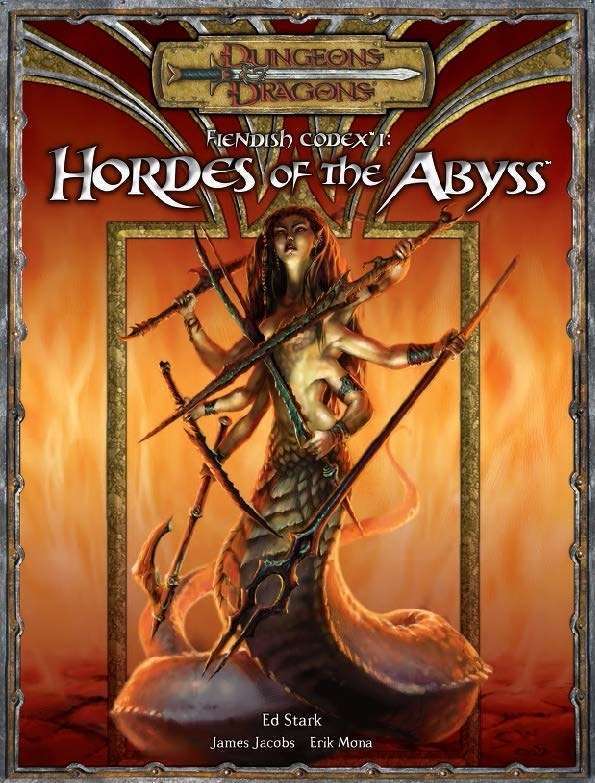
    Fiendish Codex I: Hordes of the Abyss


    Obox-ob had his title of Prince of Demons stolen from him by the Queen of Chaos, who killed him and granted his title to Miska the Wolf-Spider. Although Obox-ob was slain, his most powerful aspect survived and went into hiding on a deep layer of the Abyss called Zionyn.

    "There, on the Field of Pesh in the shadow of a great volcano called White Plume Mountain, Miska the Wolf-Spider fell in battle to the Wind Dukes of Aaqa.."

    The Wind Dukes trapped Miska in an extradimensional prison on pandemonium.

    5e Monster Manual

    Aarakocra (MM pg 12)

    Search for the Seven Shards: "In service to the Wind Dukes of Aaqa, aarakocra scout the planes in search of temples of Elemental Evil.

    "The Wind Dukes of Aaqa come from a race of elemental beings called the vaati." That's odd, as in the 2e boxed set the vaati are said to just be another named for the Wind Dukes.

    Aarakocra seek signs of the pieces' locations in order to rebuild what is now known as the Rod of Seven Parts.

    Elder Evils


    The Queen of Chaos tried to recruit a demon lord of parasites named Sertrous, but he killed every agent of hers that came to his lair. The Queen destroyed his body and cast his essence in the gulf between planes as one might cast aside a carcass."

    Against the Cult of Chaos

    This is one of those D&D Encounters adventures that came out right when 4e was ending and the 5e playtest had begun. What a weird adventure! Here's how they describe it in the book:

    "Against the Cult of Chaos is a strange mash-up of three classic D&D adventures: The Keep on the     Borderlands, Village of Hommlet, and Against the Cult of the Reptile God. It also includes some story elements from another adventure, Rod of Seven Parts, specifically the story of Miska the Wolf-Spider. This adventure combines the villages of Hommlet and Orlane into the single village of Hommel Lane, and turns the tower of Rufus and Burne into a version of the Keep on the Borderlands. It drops all of this into a nebulous setting defined in part by the conflict between the Queen of Chaos and the Lawbringer, two generic deities with no place in any known D&D world."

    Plot: A cult of Miska are trying to establish a permanent connection to Miska's "prison plane."Miska was able to send small bits of his essence through a crack in the planes to create three items of power.

    Miska's prison drains his power, forcing him to rest for a century between intervals of expelling his essence through the crack.

    A villager named Haffron Hommel found the Caves of Chaos. There was a temple of chaos which contained the Chaos Mote, the terminus of Miska's power. Haffron sacrificed himself to keep the mote in check.

    The Chaos Mote: A huge, cracked silver sphere, allows cultists to harness the raw power of chaos. A villager threw their body into the mote to stop it from growing.

    Miska's Items:
    • The Chaos Blade: When you strike your enemy with this weapon, a small measure of your foe's life force is absorbed by this weapon and directed into you (you are coated in sweet temporary hit points!).
    • The Death Circlet: This black circlet has seven green gems set in it. They are dull and dead, as if any magical power they once held had been spent. When you kill people, you can store their souls in the gems and then expend their energy to heal yourself or do extra damage.
    • The Scroll of Final Words: Any attempt to destroy it ends in failure. You can use this to regain an expended spell slot.
    Links

    So When Exactly was the Law/Chaos War? Try reading this... you'll lose hours of time as you fall deeper and deeper into D&D lore.